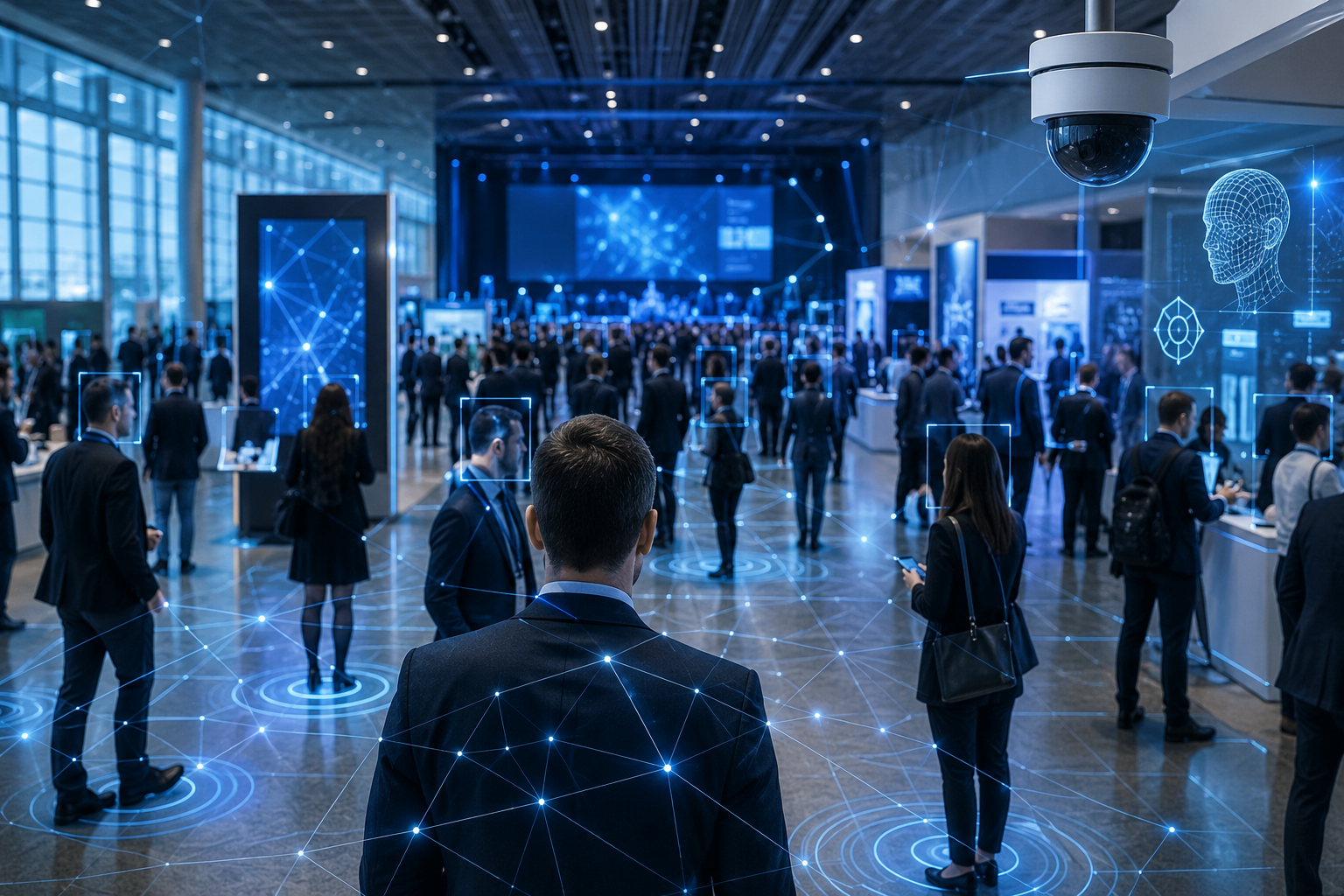
Business conferences used to be relatively simple environments. People arrived at a venue, listened to presentations, exchanged business cards, attended networking sessions, and left with a collection of notes and new contacts. Most interactions disappeared once the event ended. Today, that model is rapidly changing. Modern conferences increasingly operate as highly digitized ecosystems where attendee behavior is continuously measured, analyzed, and transformed into valuable commercial data.
The transformation is happening quietly because most participants notice only the visible side of event technology. They download conference apps, scan QR codes, wear smart badges, receive personalized schedules, and navigate venues through interactive maps. Behind these convenient features, however, a far more complex system is operating. Event-tech platforms now collect enormous amounts of behavioral information about how attendees move, interact, communicate, and engage throughout an event.
For conference organizers, sponsors, and technology providers, this data has become one of the most valuable assets in the modern event industry.
Conferences Are Becoming Behavioral Analytics Environments
Modern event platforms no longer function simply as registration systems. They operate as integrated data ecosystems designed to capture attendee behavior at nearly every stage of the conference experience. Every interaction inside a conference environment can potentially become measurable information.
Organizers may track which sessions participants attend, how long they remain inside specific rooms, which exhibition booths attract the highest traffic, and how attendees move through physical spaces during the day. Mobile event applications often collect click behavior, networking activity, content preferences, polling responses, session ratings, and interaction histories between participants.
In larger conferences, badge-scanning systems create highly detailed movement patterns that allow organizers to analyze visitor flow almost in real time. AI-powered heatmaps can identify which parts of the venue generate the highest concentration of attention, where people spend the most time, and which areas fail to attract engagement.
Some event systems integrate with Wi-Fi infrastructure or Bluetooth beacons to monitor proximity and movement throughout the venue. In these environments, conferences begin functioning less like temporary networking spaces and more like intelligent behavioral tracking systems.
Why Sponsors Want This Data
The rapid expansion of event-tech analytics is closely connected to the financial structure of modern conferences. Conferences have become expensive operations involving sponsors, exhibitors, technology vendors, media partners, and corporate investors who increasingly expect measurable returns.
Traditional event metrics are no longer considered sufficient. Sponsors no longer want to know only how many people attended a conference. They want precise behavioral insights. How many visitors stopped at their booth? How long did conversations last? Which attendees opened sponsored notifications inside the conference app? Which sessions generated the highest engagement among decision-makers? Which participants interacted with follow-up materials after the event ended?
Behavioral analytics allows conference organizers to offer sponsors something far more valuable than simple visibility. It offers measurable attention.
This changes the logic of conferences themselves. Networking events increasingly resemble digital marketing ecosystems where attendee behavior is continuously transformed into performance metrics.
Most Attendees Do Not Fully Understand the Scale of Tracking
One of the most important privacy issues surrounding modern event technology is the lack of awareness among participants themselves. Most attendees understand that conferences collect registration details and contact information. Far fewer realize how extensive behavioral monitoring has become inside modern event infrastructures.
Unlike traditional websites, conferences combine both digital and physical tracking environments. Behavioral data is no longer limited to online clicks or app usage. Real-world movement, physical presence, networking behavior, and spatial interactions become measurable assets.
A participant may unknowingly generate a detailed behavioral profile simply by moving through the venue, attending sessions, scanning badges, using networking tools, and interacting with digital infrastructure throughout the day.
The situation becomes even more complex because conferences are often perceived as temporary professional spaces rather than environments of continuous data collection. Many attendees behave naturally inside networking areas without considering that their interactions may be analyzed long after the event ends.
The line between operational convenience and invisible surveillance becomes increasingly difficult to define.
AI Is Expanding the Scope of Event Monitoring
Artificial intelligence is accelerating this transformation even further. AI-powered event systems are now capable of analyzing attendee behavior with a level of sophistication that was previously impossible in physical conference environments.
Some platforms use predictive analytics to identify “high-value attendees” for sponsors or exhibitors. Others recommend networking contacts based on behavioral patterns, professional interests, session attendance, or interaction histories. AI systems can also optimize venue traffic flow, personalize schedules, and automatically suggest business opportunities between participants.
From an operational perspective, these tools appear highly efficient. They promise smoother networking, improved attendee experiences, and better commercial outcomes for organizers and sponsors. However, they also introduce new ethical questions about transparency and informed consent.
Most conference participants are not fully aware that AI systems may be continuously analyzing their engagement patterns throughout the event. In some cases, attendees are not simply participating in conferences – they are simultaneously functioning as sources of behavioral training data for increasingly advanced event-management systems.
The Rise of Biometric and Facial Recognition Systems
Another rapidly growing area involves biometric technologies. Some conferences are beginning to experiment with facial recognition systems for venue access, registration, VIP management, or security control.
From a logistical perspective, these systems reduce waiting times and simplify access management. But biometric data creates fundamentally different privacy risks compared to standard registration information. Unlike passwords or email addresses, biometric identifiers cannot easily be changed if compromised.
As conferences adopt more advanced authentication technologies, they also increase the sensitivity of the information stored inside their systems. Facial recognition, behavioral profiling, and location tracking together create an environment where professional events begin to resemble highly monitored digital infrastructures rather than temporary gathering spaces.
This is especially important because conferences often involve executives, investors, researchers, government representatives, and technology professionals discussing commercially sensitive information. Behavioral patterns inside these environments may reveal strategic business interests, partnership intentions, or emerging industry trends.
Convenience Is Changing Privacy Expectations
One reason these systems continue expanding is that attendees themselves increasingly expect frictionless digital experiences. Personalized schedules, instant networking recommendations, mobile check-ins, AI-powered matchmaking, and seamless venue access have become part of the modern conference experience.
Convenience changes user behavior. Participants often accept extensive data collection in exchange for smoother navigation and personalized interactions without fully considering the long-term implications.
This reflects a much broader trend across digital culture. People continuously exchange behavioral data for efficiency, personalization, and convenience. Conferences simply represent one of the newest physical environments where this exchange is becoming normalized.
The problem is that professional spaces carry unique sensitivity. Conferences are not entertainment platforms. They are environments where people build partnerships, discuss investments, negotiate contracts, and exchange commercially valuable information.
As event-tech systems become more sophisticated, the amount of invisible behavioral intelligence generated during conferences grows significantly.
The Privacy Boundary Is Still Undefined
The central problem facing the event-tech industry is not the existence of data collection itself. Modern conferences depend heavily on digital infrastructure, and many analytics tools genuinely improve logistics, safety, and attendee experience.
The real issue is transparency.
Most participants still do not clearly understand what information is being collected, how long it is stored, who gains access to it, or how it may later be used. Privacy policies often remain vague, technical, or intentionally difficult to interpret. Consent mechanisms may technically satisfy regulations while still leaving attendees unaware of the actual scale of monitoring taking place around them.
As conferences continue evolving into intelligent data environments, the event industry faces an increasingly important question: where should the privacy boundary exist inside professional networking spaces?
Technology itself will almost certainly continue advancing. AI-driven personalization, predictive networking systems, biometric access control, and behavioral analytics will likely become even more integrated into future event infrastructures.
The real challenge will not be technical capability. It will be whether the conference industry can develop enough transparency, trust, and ethical restraint to prevent professional events from quietly turning into environments of continuous invisible surveillance.